Operation Laser Kiwi: help us take New Zealand-made energy on the road


How the grid handled record electricity demand - and why this time was different; Mt Hutt heads toward an electric future (and a new electric snow groomer should be on every ski field's list); Naut and Rayglass partner up to launch a new electric boat; solar reaches a major global milestone and California sets a solar record; an 'energy positive' prototype vehicle powered by the sun; and The New York Times sees the electric transition in action on the roads of Pakistan.

Do the griddy
There has been plenty of chat about our electricity network over the past few weeks, and plenty of media stories about high wholesale prices, a potential shortfall and ‘warnings’ as a result of record demand. More electricity use is something we're gunning for at Rewiring because we need to shift away from expensive fossil fuels and, as smart observers pointed out, the system worked as intended during the cold snap - even with some unexpected issues to contend with.
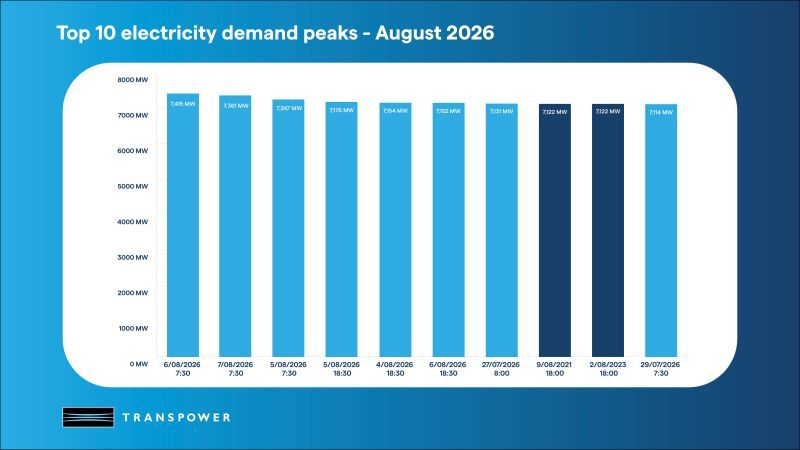
In response to a comment from Mike Joy saying we were "on the verge of blackout", Concept’s associate director Buddhika Rajapakse said “it was a massive overstatement and incredibly unhelpful for uninitiated audiences.”
“The way Transpower deals with generation shortfalls is: 1. Customer Advice Notice. 2. Warning. 3. Grid Emergency Notice declaration. 4. Potentially coordinated and targeted shedding of load - NOT widespread blackouts. We didn't even get past #1 so far.”
As Marcel Podostki wrote: “NOT A SINGLE WARNING WAS ISSUED.” And, as he laid out, it is clear there is a transition in action.
1) This is the first time in 52 years that NZ has gone through a winter without baseload gas.
2) This is the first time in 66 YEARS that NZ has gone through a winter without baseload coal.
3) Compared to 2025, there was 750MW less gas capacity available.
These things should be astounding enough but wait there's more...
4) Demands peaked higher than forecasts - this required revisions of forecasts, which were communicated to industry via notices.
5) Because there was no baseload gas, different equipment responded in different ways - there was still gas and coal used on the grid for specific periods.
6) This was the first winter that BESS played roles.
The Sapere report we had commissioned showed that diesel could play a role in the system in emergencies - at a lower cost than LNG.
As Podostki wrote:
“Whirinaki, built by the government and sold at a loss, is another example. Intended to only operate during emergencies, it mostly didn't; built in the wrong place, at the wrong time, for the wrong purpose, it has spent most of the past two decades gathering dust. In a grid that had baseload gas and coal, it simply wasn't needed. But now, and only now, it's found a niche; as a fast-responding unit able to turn on for an hour or two and then switch off. It's only run for 12.5 hours this year, and it might not run any more this year. If so, it needs to have earned enough money in those 12.5 hours to pay for all its annual costs, and thus it requires momentarily-high prices; all the alternatives are worse. Both its operation, and those prices, were used as examples of crisis. That is not true; they are examples of the interregnum; of the transition in action.”
Christina Hood also provided a great rundown.
Analysis of the LNG terminal from a range of experts clearly shows there are other options available to deal with the dry year. More renewable generation - and more coming - more back-ups and more demand flexibility have changed the calculations. LNG may have been helpful for 2024, but that ship has sailed.
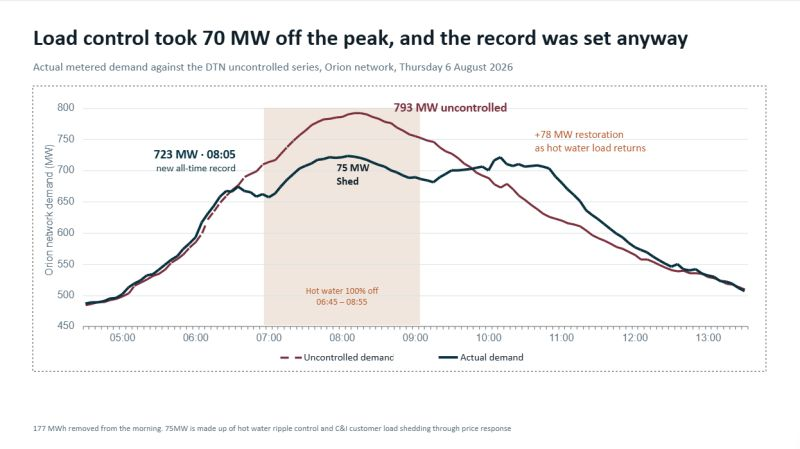
Orion also showed just how much a coordinated effort can yield.
“Across the upper South Island, between 180MW and 200MW of hot water load was temporarily controlled during the peak, while major electricity users also reduced demand in response to pricing signals from Orion ... For context, the upper South Island's peak demand reached 1,251MW. Without this coordinated action, demand would have been around 15% higher. The flexibility made available through this coordinated load control helped manage three issues: network peaks, the upper South Island transmission constraint, and high wholesale electricity costs and overall demand as New Zealand's national demand record was broken."
Traditionally, lines companies have reduced demand for hot water with ripple control, which is a pretty blunt but effective instrument. Increasingly, with smart meters, smart chargers and smart appliances, we should have even more flexibility.
Cold snap
Many of our big ski fields use grid electricity to run the lifts and snow makers, but there’s still a bit of burning going on.
With a bit of help from Meridian’s business decarbonisation fund, the Mt Hutt team is on a mission to be carbon neutral by 2030 and it started with an upgrade in the kitchen.
Mt Hutt is a serious food and beverage operation serving around 4,000 visitors a day during the season, and few things are as sought-after as hot chips on a cold day. The kitchens ran on LPG. At altitude and in cold temperatures, that meant heavy cylinders moving up and down an icy access road. As the fryers neared end of life, switching to electric made obvious sense. Through the Business Decarbonisation Fund, the upgrade was effectively cost-neutral.
The second project focused on staff accommodation in Methven: 25 cabins used by workers through the winter season. Rather than draw entirely from the grid, NZSki installed solar thermal panels capable of capturing around 80% of solar energy as heat, meaning staff can get hot water without adding pressure to the grid at peak times.
We’d love to see some more electric buses (and cars) heading up our mountains, or electric snowmobiles to take over from the smelly, noisy ones they currently have.
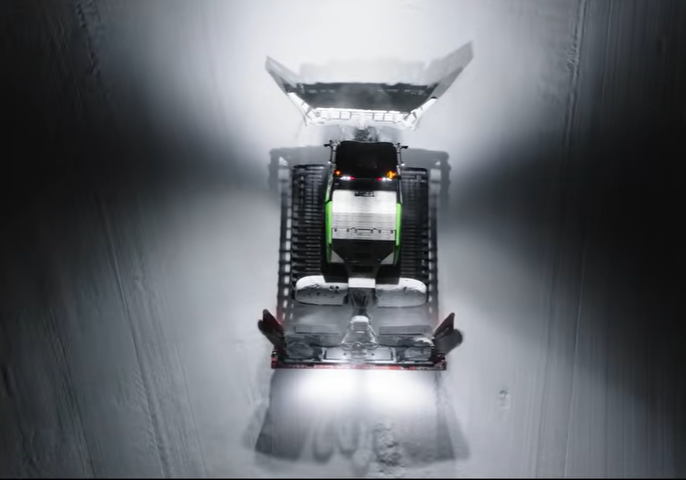
And while groomers may take a bit longer to go mainstream, the "world’s first fully electric large‑segment snow groomer" was launched this year by Prinoth Leitwolf - and it even has bidirectional charging capability so it can cook chips during the day.
Floating rates
Rayglass and Naut are coming together to build the first ever ProtectorE boat.
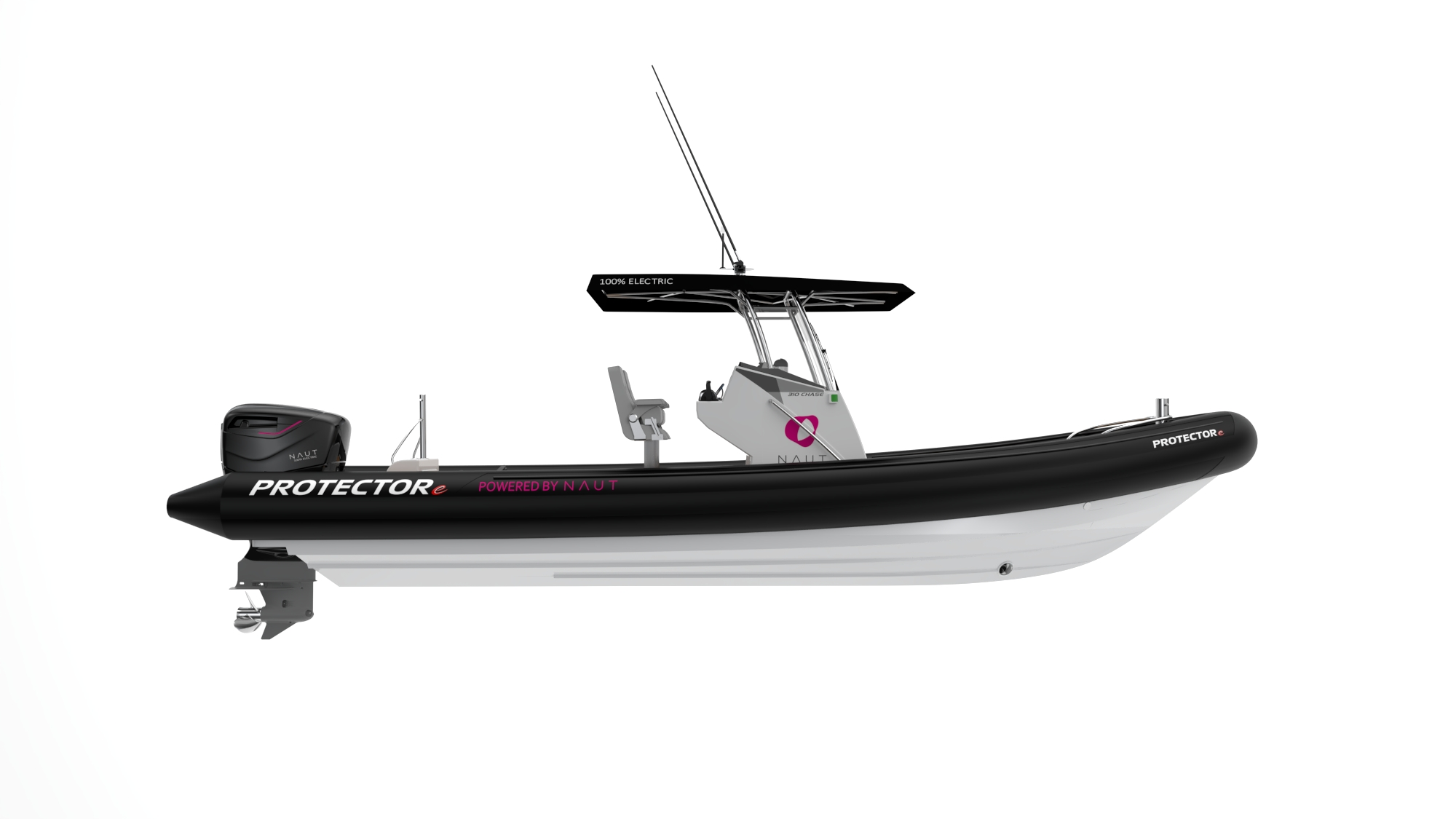
“This 310 Chase will feature everything the Protector is known for - advanced hull, class-leading capability, and toughness.” But it will be powered by Naut’s Kaha, a 100% electric outboard, which “boasts 300hp continuous power and 525hp at peak.”
Naut’s Fiona Bycroft says the partnership just makes sense for multiple reasons: “We’ve been talking to Dean [Rayglass CEO] for a long time and Naut and Protector are just a perfect cultural/people match. We see Rayglass and Protector as an innovative Kiwi company - the type of business we love to work with.”
“Plus, sailors immediately get the benefits of electric because they’re used to moving with no sounds or fumes. The Protector Chase is the gold standard chase boat in the sailing world - it’s great to have that connection.”
Sunset industry
Anyone who’s paying attention to energy knows that the sun is having a good run. And, as Yale Environment 360 wrote: “It took nearly seven decades, after the invention of the silicon solar cell in 1954, for the world to install 1 terawatt of solar capacity, conceivably enough to power the entire United States. After passing that milestone in 2022, the world added its second terawatt in 2024 and its third in 2026.”
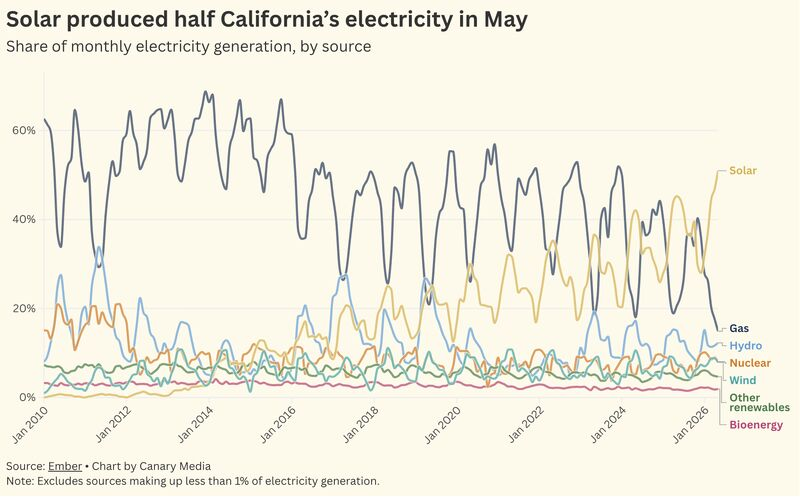
California is renowned for its sun and it’s now making the most of it, as Abby Hooper explains.
“In May, solar generated 51% of California's electricity — not for an hour, not for a day, but for all 31 days. It's the first time any large-scale power system in the world has crossed that threshold for a full month … How did they get there? You guessed it. Batteries. California's battery storage capacity has grown from 61 megawatts a decade ago to 16 gigawatts today. That's the difference-maker — it lets the grid bank midday solar and release it after sunset, covering more than a quarter of nighttime demand. Solar also outproduced natural gas in California for the first five months of 2026.”
Energy positive
We’ve seen an unmanned solar-powered plane being built in Christchurch by Kea Aerospace, a manned solar-powered plane that’s gone around the world, and a few solar-powered cars, but, as Driven Car Guide reports, there’s a new solar-powered kid on the block and it looks pretty odd.
“Deep Orange 17 is an 'energy positive' prototype that produces more energy than it consumes. Built by students at Clemson University in South Carolina, it uses solar panels and maximises energy recovery. Students found that an average 20km daily commute could produce up to 50km extra range.
Bike life
Pakistan, the Philippines and other developing nations have been importing solar panels like there’s no tomorrow. And the electric motorbikes are coming in droves too.
New York Times reporter Chico Harlan visited Pakistan to see what’s happening and “the war in Iran has sped up the clean energy transition”.
“In the countries most vulnerable to higher gasoline prices, like Pakistan, the most common vehicles tend to have two wheels, not four. In those countries, the electric motorcycle era has arrived.”
“Electric motorcycles scarcely existed in Pakistan three years ago, but now sales are surging. The switch signals how quickly, and perhaps permanently, people in developing countries are pivoting away from fossil fuels as the war in Iran keeps oil prices high.”
Economics and air pollution are the primary reasons bans on ICE vehicles have been announced in places like Ethiopia and Laos, while cities in Vietnam and India are also embracing small electric transport.
People installing solar power systems with batteries on their homes, hoping to avoid the disruption of a power cut, are being told to check with the installer that the battery can provide that protection.
Read moreDownloadKiwis are catching on to the benefits of solar panels - and demand's spiking ... But the industry warns we need about six thousand more trained electricians - across the country - to do the work. Rewiring Aotearoa Chief Executive, Mike Casey told Heather du Plessis-Allan he hopes interest will continue over time. He says oil shortages because of the Iran war is keeping demand high - with energy prices climbing. He says solar is the one reprieve Kiwis get.
Roger Robson-Williams owns 20% of New Zealand's electric tractor fleet. That sounds impressive, until you learn there are only five of them. But, like his fellow electric tractor enthusiast Mike Casey, he's on a mission to change that by providing a bit of inspiration and information.
Read moreDownload