Don't listen to Old Man Gas. Ditch LNG. Support New Zealand-made energy!

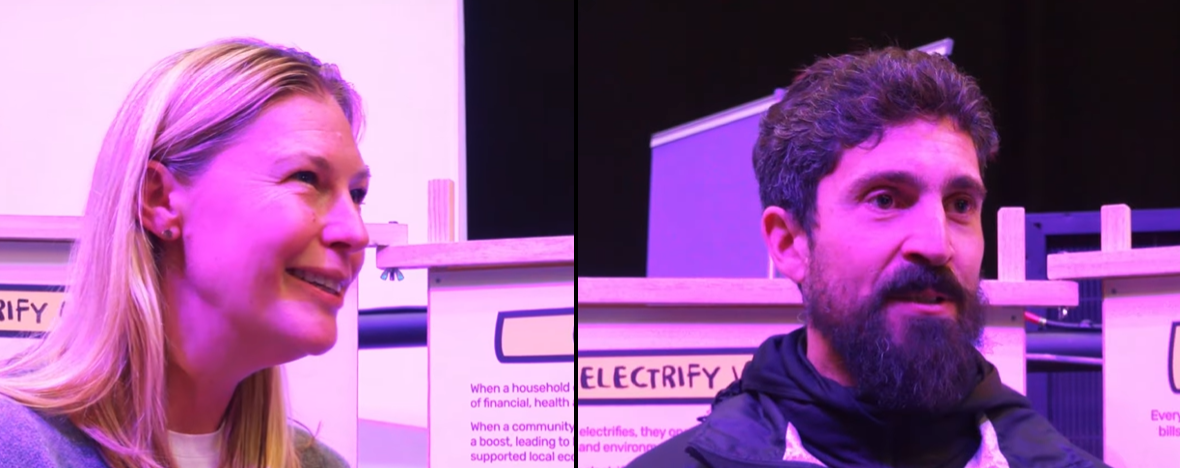

One of the first community electrification groups to be established was Electrify Wānaka. From asking council for plan changes that would allow more solar to be installed (and pointing out that certain restrictions are at odds with council's climate ambitions) to setting up stands outside the supermarket to share the economic benefits of electric homes and transport, local leaders like Pierre Marasti and Lauren Fraser are helping to modernise the rules, save households money, reduce emissions and set a good example for the next generation.
One of the best forms of marketing is word of mouth, especially when it comes from trusted sources. That's why we're supporting almost 30 community groups around the country so they can help push the electric message in their area.
All of our community groups are full of Bright Sparks. And it doesn't matter if you're in it for the economics, the emissions, or the energy security because everyone wins with electrification.
If you're interested in getting involved with this locally-led national movement, check out the groups that already exist or start your own. https://loom.ly/WTOZP9Q
Political Power has gone local! Dr Nick Smith, mayor of Nelson and ex-National Party minister, is an early adopter when it comes to electric machines but, through his efforts with the council and his close involvement with the Ratepayer Assistance Scheme, he's also embracing one of Rewiring's core mantras: once you've electrified your own life, electrify someone else's life, too.
Read moreDownloadWhether it's the growing number of electric buses, new electric trains for the lower North Island and City Rail Link, or new electric ferries, we love seeing more electric transport options in our big cities. It's also good to see some of our smaller cities like Palmerston North, Timaru and Nelson going electric and, as is almost always the case, the drivers reckon it's better on electrons. At the Electrify Nelson expo, we spoke with one driver Lee about the city's electric buses. And he definitely wouldn't go back to diesel.
Read moreDownload