Don't listen to Old Man Gas. Ditch LNG. Support New Zealand-made energy!


Bernard Hickey laments the LNG decision, asks a question we've been asking, and speaks with energy analyst Larry Blair.
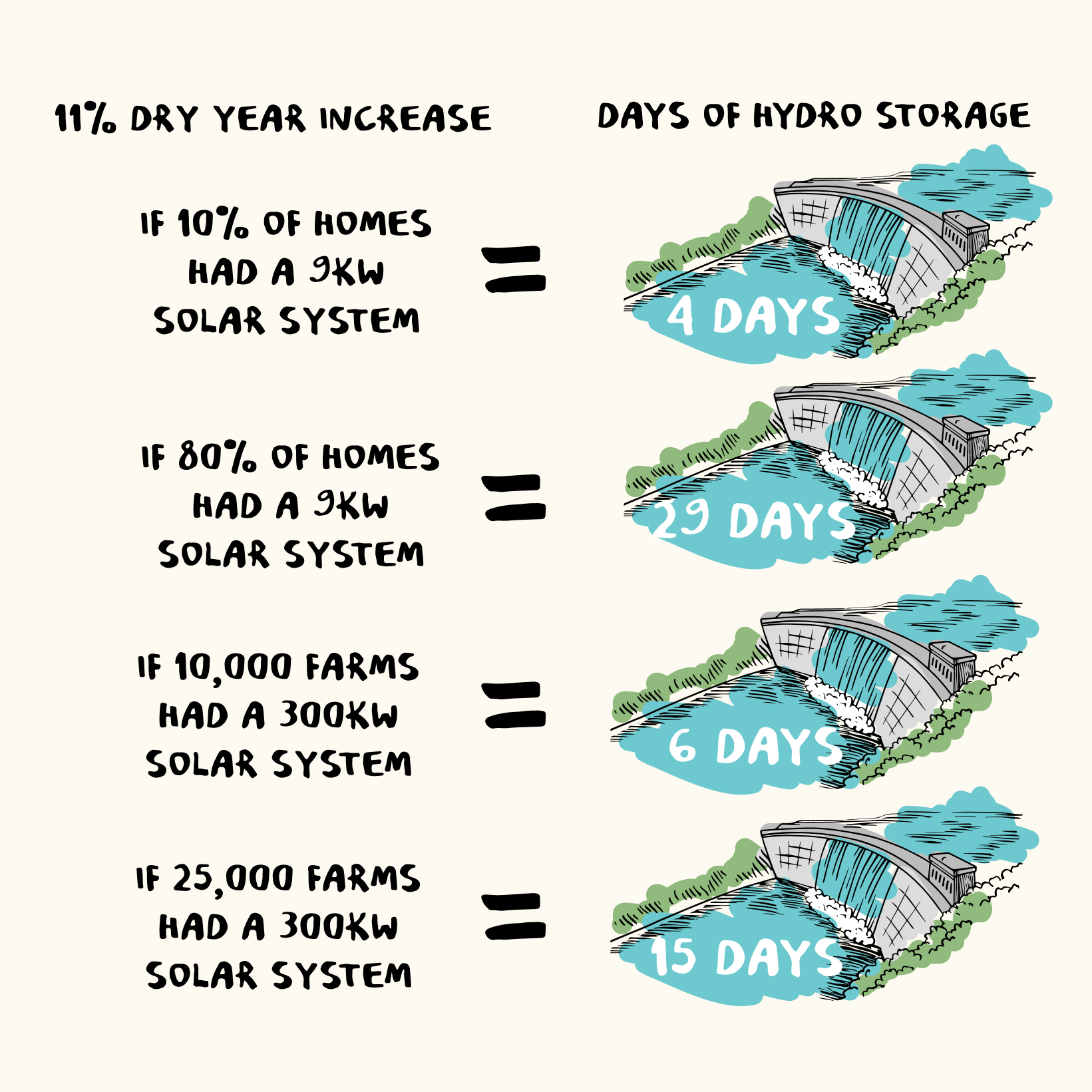
The decision didn’t include the option of using that $2.7 billion up-front to pay for grid-scale, residential and commercial solar panel and battery capacity that would allow the lakes to remain full in a dry year. That amount would buy the equivalent of 2 Gigawatts worth of generation and storage, which is the equivalent of about four Benmore Dams worth and enough to power 2.5 million households for a year.
Instead, the LNG terminal may never be used but will have to be paid for annually, and the benefits in the counterfactual put forward by the Government in its fact sheet are dependent on lower wholesale prices (than would otherwise be the case) being passed on by gentailers to consumers.
Mike Casey said the Government couldn’t create cheap electricity with expensive fuel.“The Government is basically forcing New Zealanders to invest in an LNG terminal and hoping prices might go down eventually. You cannot make cheap electricity with expensive fuels and LNG is one of the most expensive fuels there is. We don’t like burning Indonesian coal. So why replace it with expensive Australian gas? This decision just locks us into another expensive overseas dependency.” Rewiring Aotearoa CEO Mike Casey via a statement
Political Power has gone local! Dr Nick Smith, mayor of Nelson and ex-National Party minister, is an early adopter when it comes to electric machines but, through his efforts with the council and his close involvement with the Ratepayer Assistance Scheme, he's also embracing one of Rewiring's core mantras: once you've electrified your own life, electrify someone else's life, too.
Read moreDownloadWhether it's the growing number of electric buses, new electric trains for the lower North Island and City Rail Link, or new electric ferries, we love seeing more electric transport options in our big cities. It's also good to see some of our smaller cities like Palmerston North, Timaru and Nelson going electric and, as is almost always the case, the drivers reckon it's better on electrons. At the Electrify Nelson expo, we spoke with one driver Lee about the city's electric buses. And he definitely wouldn't go back to diesel.
Read moreDownload