Don't listen to Old Man Gas. Ditch LNG. Support New Zealand-made energy!

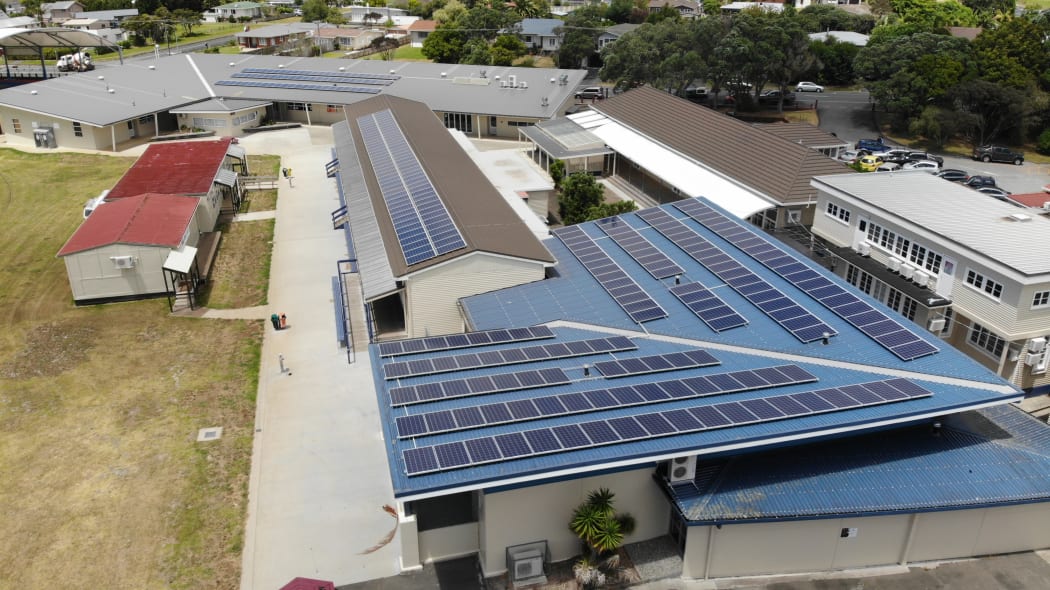

We've long been advocates of more solar on schools at Rewiring Aotearoa and recent analysis by Peter and William Bisley shows the huge potential for schools to benefit while also contributing to the grid.
Their modelling was based on just 5% of the roofspace being used, with a focus on self-consumption. That would generate around the same amount of power consumed by about 20,000 houses.
But we need to be more ambitious. Bigger solar systems on schools plus batteries also offer the opportunity to MASSIVELY contribute to communities and their local networks.
Despite the potential, and despite some schools already embracing solar, our discussions with a number of schools have shown that it is generally harder than it should be. Many are still uncertain about the Ministry of Education settings and don't know how much of the solar savings they are able to use elsewhere and for how long.
Bisley told RNZ that schools also need to focus on energy efficiency measures first, like insulation or LED lighting, but solar is the thing that will reduce energy bills the most, especially as most of a school's energy consumption is during the day - and especially as the gas shortage rears its ugly head and continues to increase bills.
We've talked to many politicians and officials about these issues and asked for more clarity, but it's great to have other voices (and compelling numbers) to back our call.
And what better way to teach Kiwi kids about the many benefits of going electric than to have their schools running on the sun.
Check out the research here.
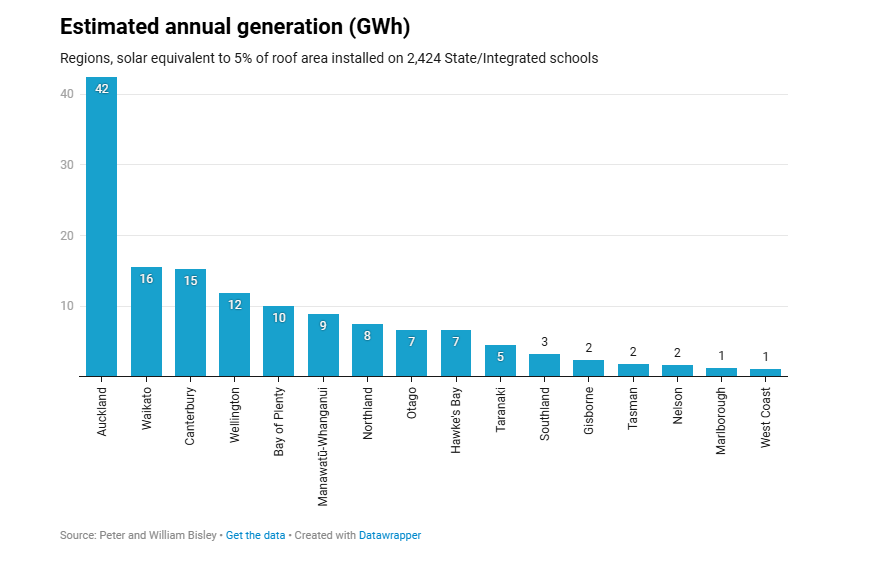
As RNZ said:
Analyst Peter Bisley modelled what it would take to get solar panels on all schools - where an estimated 16 per cent of the population are most days of the week. He found the panels - taking 5 per cent of available roof space at all schools - would have a capacity of 108 MW, the amount consumed by about 20-thousand houses. And he says the fact that schools' highest demand for energy is during the day, it would be the perfect fit. Schools in New Zealand are encouraged to install solar, but only after energy efficiency improvements like LED lighting or better insulation are done. Peter and his brother William Bisley have sent their modelling to the Ministers of Education and Energy, in the hope their idea will be taken up.
Political Power has gone local! Dr Nick Smith, mayor of Nelson and ex-National Party minister, is an early adopter when it comes to electric machines but, through his efforts with the council and his close involvement with the Ratepayer Assistance Scheme, he's also embracing one of Rewiring's core mantras: once you've electrified your own life, electrify someone else's life, too.
Read moreDownload