Don't listen to Old Man Gas. Ditch LNG. Support New Zealand-made energy!


Big report lays out the massive opportunities for electric cars and trucks to provide power for homes or the grid and earn owners money; Lake Wakatipu could be getting some electric ferries; large trucks are increasingly going electric as hydrogen remains tiny; Hannah Ritchie clears the air with her new book; Transpower prepares for another 40,000 kettles on Saturday night; and some coal-based innovation on the West Coast.

Storage wars
A new report from Concept Consulting and specialist EV consultancy Retyna has laid out the potential benefits of vehicle to grid technology and what needs to happen to get the benefits.
“The ability to supply power from EV batteries back into the grid at times of peak demand – so-called ‘vehicle-to-grid’ or ‘V2G’ – is emerging as a significant potential energy resource.”
The upfront cost of EVs continues to drop and with proposed changes to Road User Charges, EVs will be the cheapest option per km, but the report estimates they could also make their owners $2k per car per year if sending power back to a house or into the grid.
The bigger the battery, the bigger the opportunity and trucks could make between $10–25k per truck per year.

EVs don’t have to be a drain on the system. They can be a net positive and, if used smartly, they can help reduce the need for expensive upgrades to poles and wires, lower the cost of electricity for everyone else on the network, help remove homes from peak and offer a backup if the grid goes down.
And let’s not forget about the massive emissions reductions.
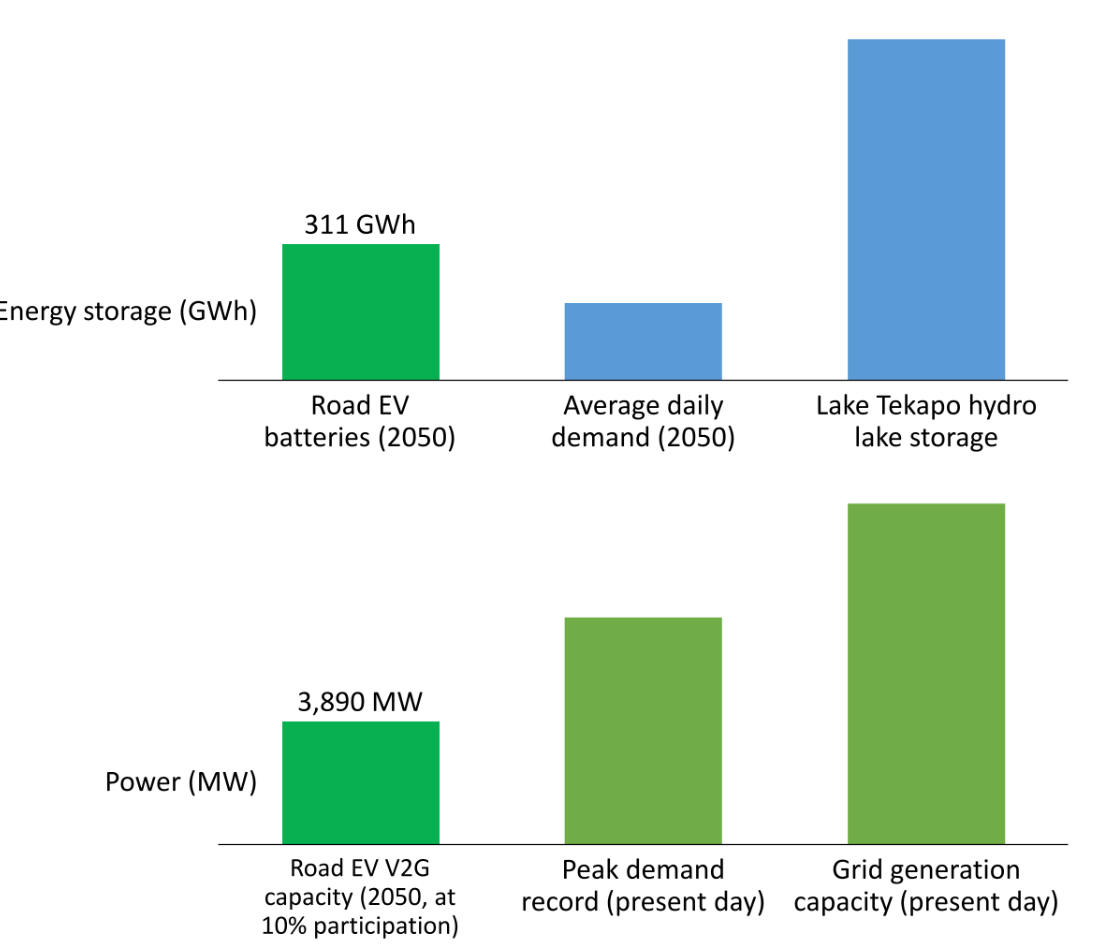
Plenty of change is required to make the most of this opportunity and it highlights the need for:
“The best and most important way to incentivise and reward productive use of V2G is with cost-reflective pricing”, something Rewiring Aotearoa has long been advocating for.
In the UK, Octopus and BYD are offering a V2G package, something the authors believe would make it easy for consumers.
Bring it on, we say. And to the vehicle manufacturers, check the research on battery degradation (negligible difference and maybe even some benefit), update your warranties, and let's open the gates.
Making waves
New Zealand is surrounded by water. New Zealand produces a lot of renewable electricity. Ergo, New Zealand should have a lot more electric boats.
We’ve seen the beginnings of a shift away from diesel boats, from EV Maritime’s electric ferries in Auckland, McKay’s electric boats in the Pacific, Vessev’s smaller tourist boats and Naut’s beautiful speedboat.
As the roads get busier in Queenstown, one of the fastest growing areas in the country, and developers build homes further away from the main drag, the lake is beckoning as another option to get people where they need to go.
The company behind over 700 sections in Kingston at the southern end of the lake is in the early stages of research into an electric hydrofoiling ferry.
[Kingston Village Limited] senior development manager Nicola Tristram said the aim was to provide a 30-passenger service with a travelling time of just 40 minutes.
That compares favourably with the current journey along Kingston Rd, which is often affected by chronic traffic congestion from about Jack’s Point onwards.
Real NZ is also reportedly looking into an electric ferry service, and Electric Wave - a company backed by Rod Drury, EECA and others - has installed a charging station at the Frankton Marina.
We’re still waiting on Shotover Jet’s electric boat. And we reckon plenty of tourists will be, too.
Going big
There’s a long list of things that electric naysayers thought wouldn’t be able to be done with a battery, from buses to mining and construction equipment to big rigs. Hydrogen may play a role in some hard to electrify sectors where the benefits outweigh the inefficiencies, like aviation, shipping or heavy industry, but it’s increasingly unlikely that it will be needed for wheel-based transport, as Colin McKerracher, head of clean transport at BloombergNEF shows.
“Hydrogen fuel cells lost the car market but will dominate heavy trucks, right? No, batteries are winning that market too. Technology neutrality is good policy, but at some point the market decides what is going to work.”
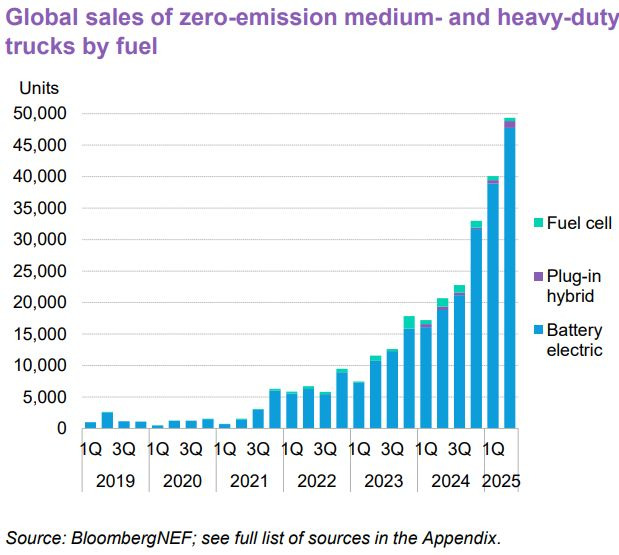
“Sales of electric heavy trucks are taking off, up 140% in the first half of 2025. Many of the barriers around performance, residual values, and operational experience are being steadily addressed.”
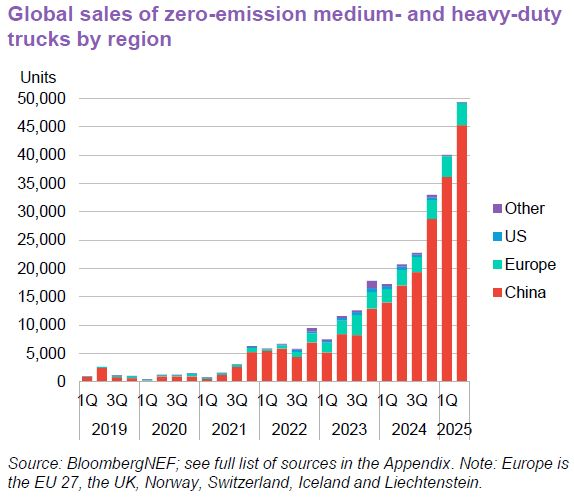
As in many areas of electrification, China is responsible for most of the growth.
Clearing the air
Just as we are driven by the data, so is Hannah Ritchie, the deputy editor of Our World in Data. Her new book, which answers 50 different questions and offers a hopeful guide to solving climate change, is out now, and in this interview with the Cleaning Up podcast she runs through a number of topics and dispels a few myths.
Switched on
For all those enjoying the All Blacks vs Australia test match on Saturday night, think of the grid operators as you get your cup of tea at half time.
“During most big international rugby tests, the women and men managing the power system 24/7 in our control rooms across the country will usually see demand increase right as the whistle blows and the boys head to the sheds. On Saturday night [during the test match with South Africa], the increase observed was roughly the equivalent to 40,000 kettles all boiling at the same time!”

Smoke on the water
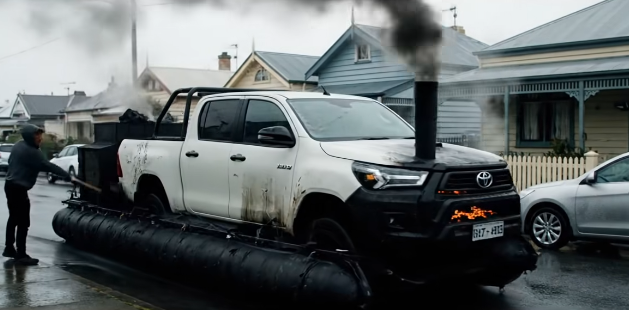
We tend to talk about electric innovation here at Rewiring Aotearoa (and this is all you really need to read to see why going electric is inevitable). But as BigNigelSasquatch (with the help of AI) shows, it seems there’s plenty of coal-based innovation happening, too.
Political Power has gone local! Dr Nick Smith, mayor of Nelson and ex-National Party minister, is an early adopter when it comes to electric machines but, through his efforts with the council and his close involvement with the Ratepayer Assistance Scheme, he's also embracing one of Rewiring's core mantras: once you've electrified your own life, electrify someone else's life, too.
Read moreDownloadWhether it's the growing number of electric buses, new electric trains for the lower North Island and City Rail Link, or new electric ferries, we love seeing more electric transport options in our big cities. It's also good to see some of our smaller cities like Palmerston North, Timaru and Nelson going electric and, as is almost always the case, the drivers reckon it's better on electrons. At the Electrify Nelson expo, we spoke with one driver Lee about the city's electric buses. And he definitely wouldn't go back to diesel.
Read moreDownload