Don't listen to Old Man Gas. Ditch LNG. Support New Zealand-made energy!

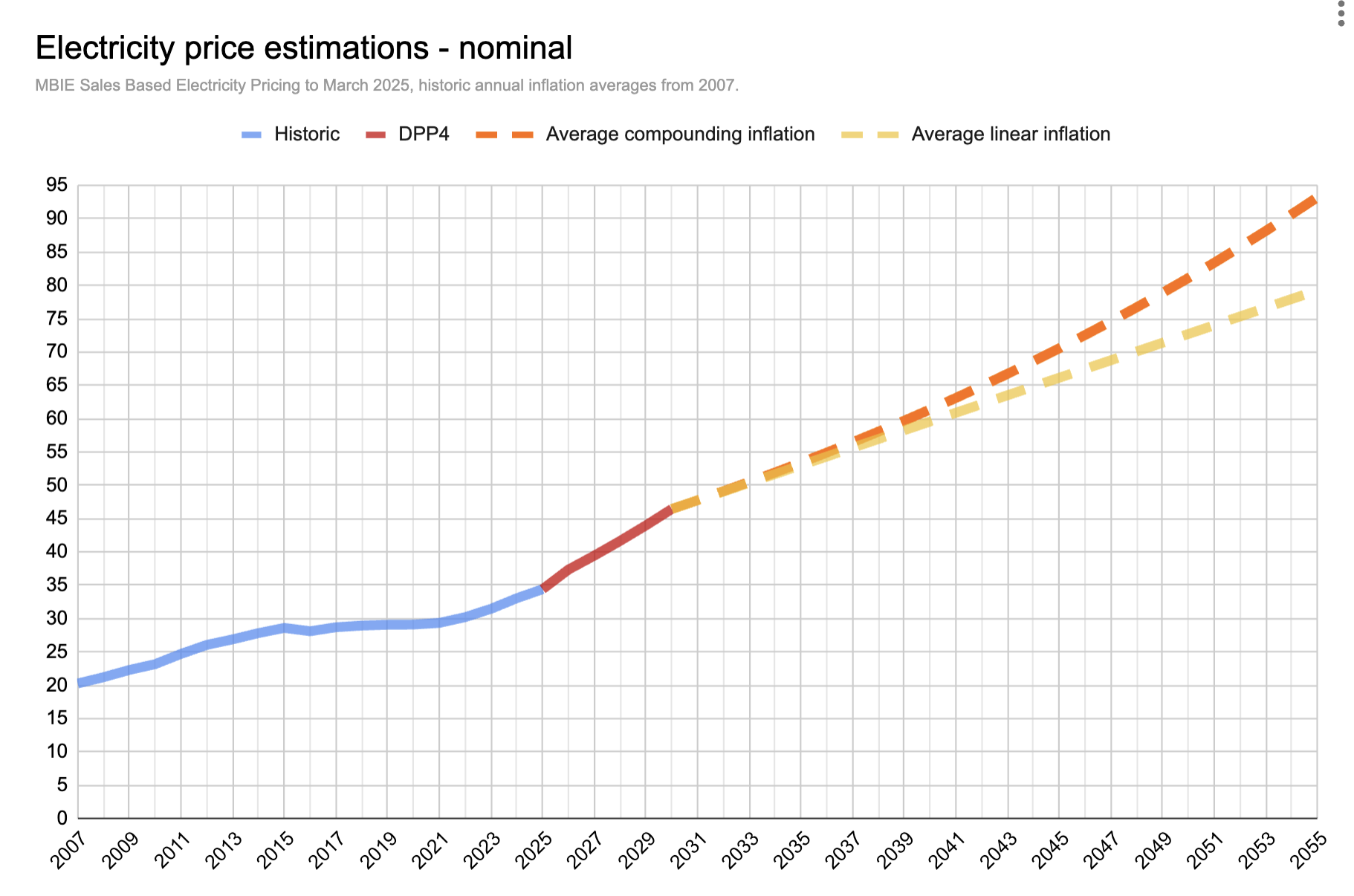

“We need more analysis," said pretty much every incumbent faced with a change that might affect their business and instead benefit customers. And that’s pretty much exactly what the energy incumbents said in their submissions to the Electricity Authority on decentralised energy systems.
Most submitters highlighted the fact that "decentralisation is already happening, offers huge potential benefits, and the criticality of urgent action to ensure outcomes for consumers are protected".
But the incumbents shared "significant reservations and concerns, questioning whether decentralisation is necessary or preferable, and calling for more detailed analysis".
Rewiring Aotearoa supports a decentralised future because we believe it's in the interests of customers and the energy system as a whole. If we don’t adapt and harness new technologies, that line on the electricity price estimates graph will continue its ascent.
We understand why the incumbents would raise questions and employ classic delay tactics. It's in their interests (and their shareholders’ interests) to keep things as they are because lines companies get guaranteed returns on their investments and generators benefit from high wholesale electricity prices and don’t lose sales volume to rooftop solar.
This is why we need good referees in the middle and we hope the EA will be led by the evidence and the real experiences of customers, rather than the loud voices that are trying to protect their patch, holding things back and gradually losing their social licence.
We also need to be careful with the idea of 'continued investment in network infrastructure', which the EA reflected from the submissions as an important aspect of unlocking this decentralised future. This sounds good in theory and we will definitely need some grid upgrades, but more poles and wires are set to make up the biggest chunk of bill increases in the coming years, so we don’t want to over-invest, especially given there is now another option.
If a decentralised solution can play a role in deferring or potentially even avoiding costly upgrades by using existing infrastructure more efficiently and also help manage peaks at a lower cost than new poles and wires, that should be prioritised.
The EA needs to ensure we have smarter pricing, better utilisation rates, more visibility of the low voltage network and smarter network management. And the incumbents need to stop delaying the inevitable.
Political Power has gone local! Dr Nick Smith, mayor of Nelson and ex-National Party minister, is an early adopter when it comes to electric machines but, through his efforts with the council and his close involvement with the Ratepayer Assistance Scheme, he's also embracing one of Rewiring's core mantras: once you've electrified your own life, electrify someone else's life, too.
Read moreDownload