Don't listen to Old Man Gas. Ditch LNG. Support New Zealand-made energy!


Does Indonesia have a returns policy? Despite plenty of talk over the years about the Huntly Power Station being switched off, yesterday the big gentailers reached an agreement to chip in for a big stack of coal so they can ensure the lights stay on if we experience another energy crunch like we did last year. As Mike Casey told Ryan Bridge on Newstalk ZB, bringing in more coal is not ideal, but something had to be done in the short term to deal with our rapidly declining gas reserves. And using more solar and building more renewables and using our stockpile of water in our hydro lakes means we might not need to burn it.
As the energy minister, Simon Watts needs to avoid rolling black outs in winter at all costs because that would be an economic disaster. But as climate change minister he should be doing everything he can to ensure we don't need to burn it.
We are going to need a lot more electricity to power all our electric machines in the future and we need that electricity to be cheap if we hope to unlock the economic benefits in our homes, farms and businesses. But we are not going to get either of those things if we have to rely on an imported, expensive fuel to generate it.
Instead, we need to use the big stockpile of water in our hydro lakes more effectively and we can do that by adding much more rooftop solar (which is the cheapest electricity for households); speeding up the fairly slow pace of large-scale wind and solar projects; rolling out more batteries (large and small) to store energy for use at peak times; and continuing to invest in geothermal.
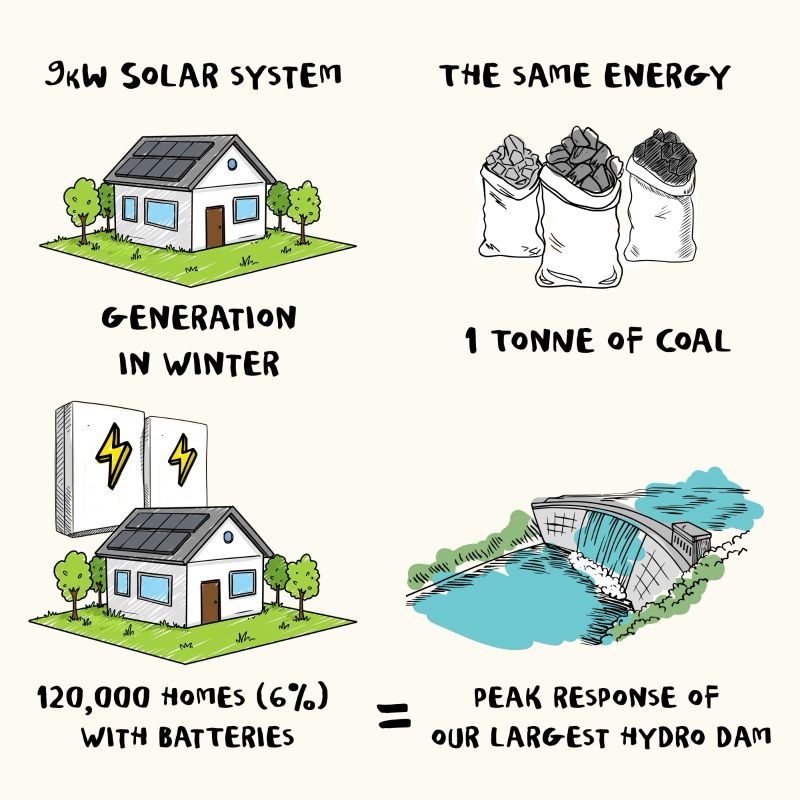
The largest single power plant in Australia today is a 3.3GW plant that runs on coal. But when you add up all the rooftop solar in Australia, it's around ten times that size.
We're seeing plenty of other markets rapidly shift away from fossil fuels for electricity generation and, as Bill McKibben wrote in Rolling Stone recently, "California, the world’s fourth-largest economy, is using 40 percent less natural gas to generate electricity than it did two years ago, simply because it’s built out so many solar farms and battery arrays." This is not a utopian dream. Increasingly, this is economic reality.